2026-11-27 ·
Signs Your Garage Door Springs Are Wearing Out in Plano
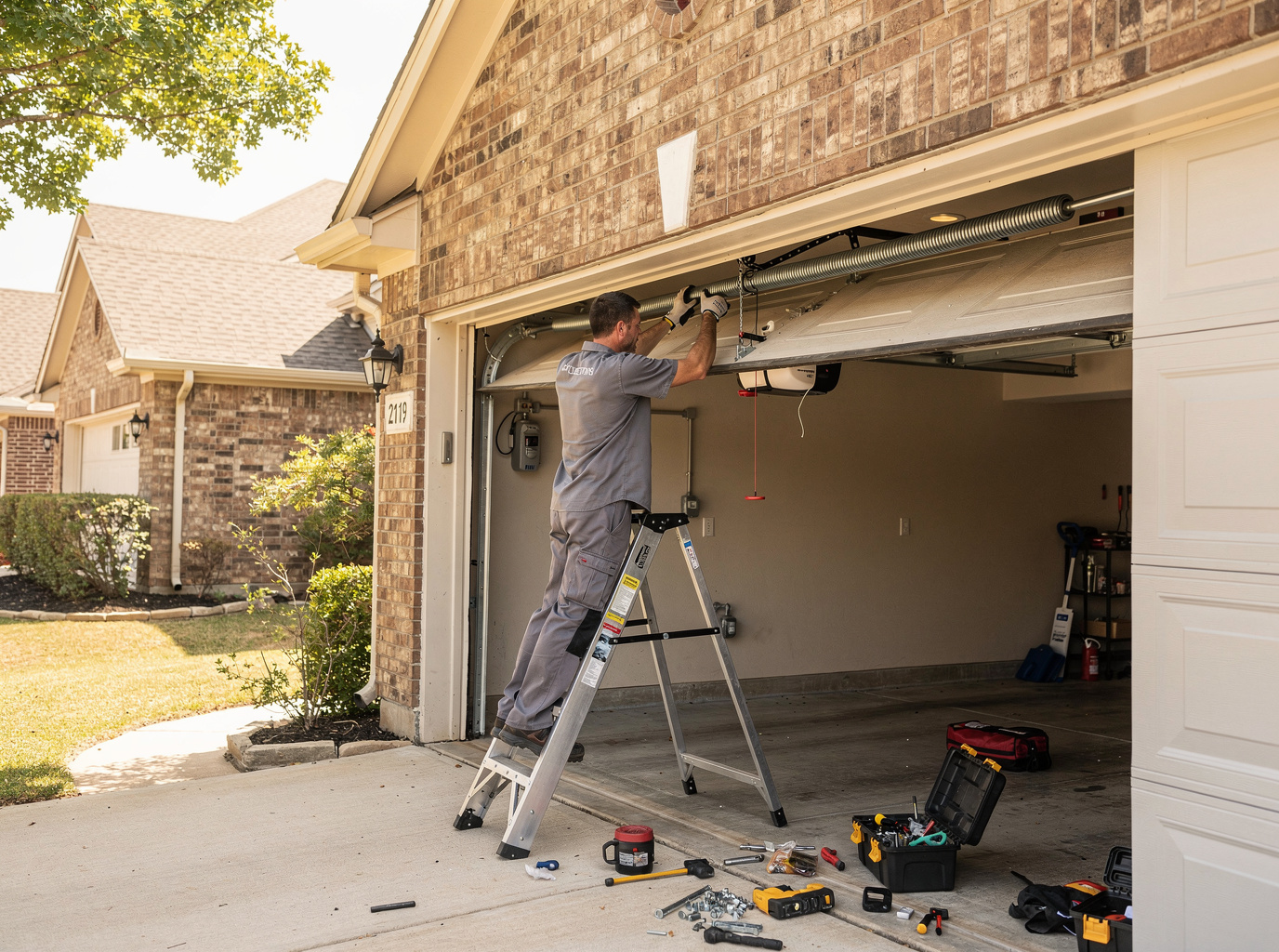
If you are deciding whether a worn garage door spring should be replaced rather than patched, the short answer for most Plano homes is yes. A broken or badly fatigued spring does not recover on its own, and replacing it restores the balance that lets the door move safely. A competent technician usually arrives with the correct winding bars and replacement parts, and when the job is finished the door should lift smoothly by hand. The sections below explain the warning signs, why North Texas conditions matter, and what to expect so you can plan the visit with confidence.
Signs Your Garage Door Springs Are Wearing Out
Springs usually give warning before they snap. Watch for a door that feels heavier than it used to when you lift it by hand, or one that rises unevenly with one side lagging behind the other. A visible gap in the coil, stretching along the metal, rust-colored flaking, or a sharp bang from the garage when the door opens or closes are all signs that metal fatigue has set in. Any of these symptoms means the spring is working near the limit of its rated cycles.
The opener often shows the strain first. If the motor sounds labored, runs longer than normal, or the door stops partway up and reverses, the opener may be compensating for springs that no longer carry their share of the weight. Many homeowners notice this on a warm afternoon when the door seems sluggish, the same kind of strain explored in our piece on why an opener struggles in Plano summer heat. Catching it early keeps the opener from working itself into a second failure.
A broken spring is easier to recognize. The door may suddenly sag, refuse to lift more than a few feet, or show a loose cable hanging near the track. Do not attempt to repair this yourself. Keep everyone away from the door while it is down, leave the opener disconnected if the door is fully closed, and schedule service before anyone tries to lift it manually.
Why Plano Weather Wears Springs Down
Springs are rated for a set number of open-and-close cycles, and the steel works harder when temperatures swing. Once winter temperatures drop into the teens on a cold North Texas morning, the metal contracts and the door can feel stiff and unbalanced until the garage warms. In July, when the attic and garage run hot, the steel softens slightly and the door may move unevenly. Repeated expansion and contraction accelerates fatigue, especially on a door that opens several times a day for commuting, school runs, and errands.
Humidity and rain add another layer of wear. Moisture encourages rust on the coils and on the winding cones, and surface corrosion can weaken the steel over time. A garage with poor ventilation, or a door that sits open during wet weather, will often show corrosion sooner than a sheltered one. Inspecting the springs once a season for rust, cracks, and uneven spacing between coils gives you a clear picture of how fast your particular door is aging.
What Happens During a Spring Replacement Visit
A proper visit begins with a check of the entire system rather than just the broken coil. The technician inspects the lift cables, drums, bottom bracket, and tracks, because a frayed cable or a misaligned track can wear out a new spring quickly. The old spring is released under controlled tension, and the new one is installed with the correct number of winding turns for the door's weight and height. Rushing this step is how people get hurt, so the work should be methodical from start to finish.
Before the technician leaves, the door should be tested by hand and with the opener. It should lift smoothly, stay put when halfway open, and close without binding or scraping. Listen for rubbing, watch the panels for uneven movement, and confirm that the safety reverse still works. If the opener struggles afterward, that deserves a separate look, and our garage door opener repair page covers those symptoms in more detail.