2026-11-27 ·
Why Your Garage Door Opener Struggles in a Plano Summer Heat
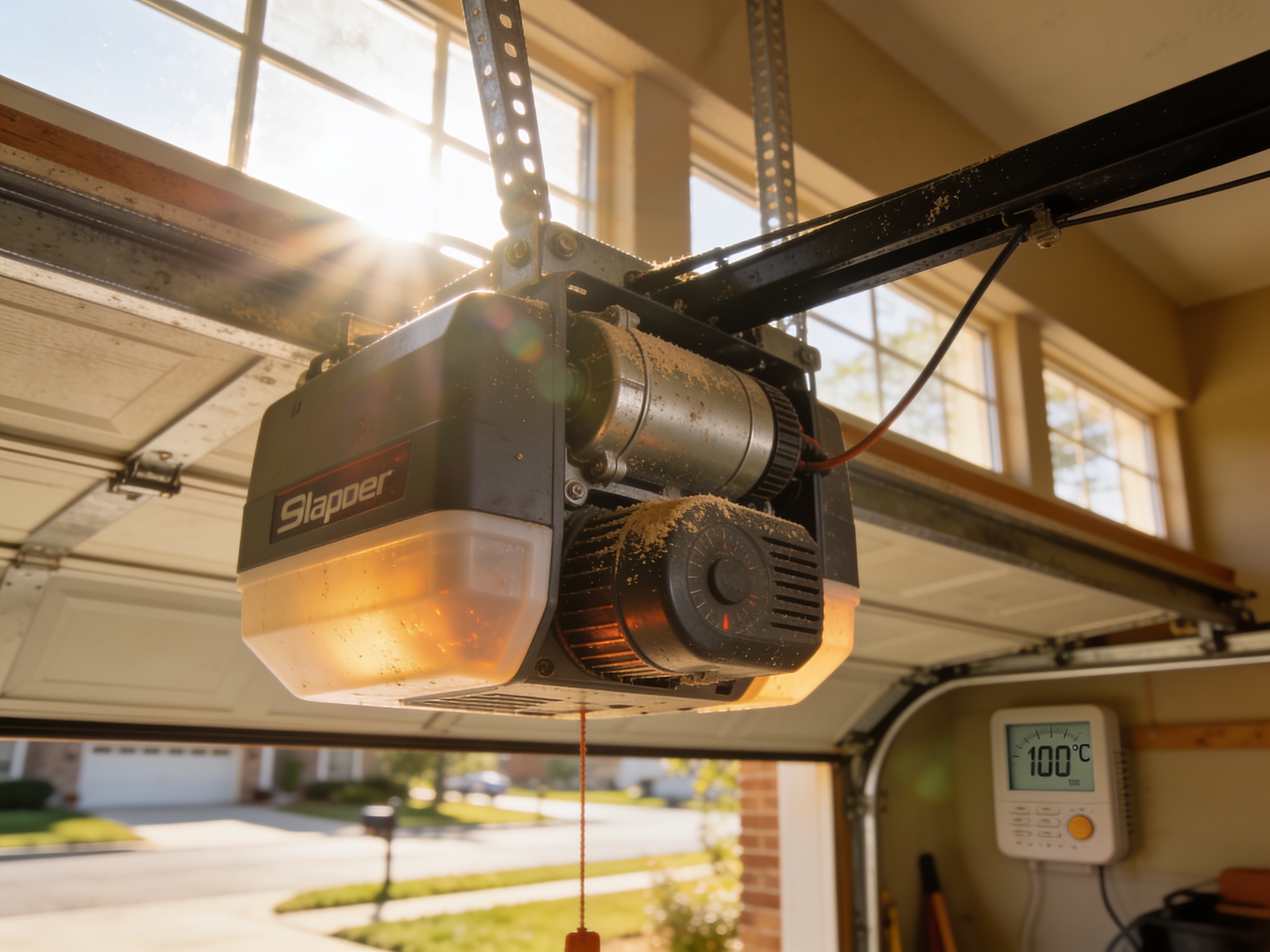
A garage door opener struggles in a Plano summer because heat strains nearly every part that makes it work: the motor, the lubricant, the drive belt or chain, and the electronics that read the safety sensors. Garage air in Plano can climb well above 120°F on the hottest afternoons, and that heat reaches the opener even when the door is closed. The usual result is slower travel, a door that reverses before it reaches the floor, or a motor that quits partway through a cycle. Most of these problems are predictable, and many can be reduced with a few checks before the hottest weeks arrive.
Why Heat Pushes the Opener Harder
An opener is rated for a certain number of cycles per hour and a certain amount of continuous run time. Those ratings assume the motor can shed heat as it works. In a closed garage during a run of 95°F-plus days, that margin shrinks quickly. The motor winding warms up, its electrical resistance rises, and it draws more current to lift the same door weight. Many openers include a thermal overload protector that cuts power when the motor gets too hot. When that protector trips, the door stops mid-travel and may wait a few minutes before it responds again.
Heat also changes how the door itself behaves. Steel panels expand on hot afternoons, and the tracks and rollers move slightly with them. Every extra bit of friction in the system is work the opener has to absorb. A door that was balanced in March can feel heavier in August, which is why a door that opens smoothly in the morning may hesitate by late afternoon. The opener is not necessarily failing. It is working harder than it was designed to in conditions it was never tuned for.
Parts That Expand, Stretch, and Slow Down
Several components respond to heat in ways that show up as sluggish operation. Lubricant on the rollers, hinges, and drive rail thins out as temperatures rise, so it can sling off or pool in the wrong places instead of staying where it protects moving parts. Belt-drive openers depend on the belt staying at the correct tension. Rubber stretches and loosens as it warms, which can cause slipping and a rough start. Chain-drive models can develop slack that makes the trolley jump or clatter when it engages the door.
The travel limit settings can also drift. Small changes in door length and track position during extreme heat may shift where the opener believes the door is fully open or closed. If the limits are set too tightly, the door can stop short or reverse as though it hit an obstacle. Checking the lubricant condition, belt or chain tension, and travel settings is often the fastest way to find out whether heat is the cause of a slowdown.
Signs Your Opener Is Overheating
Heat-related strain tends to appear in a few recognizable ways. Pay attention if you notice any of these during warm weather:
- The door starts normally but slows noticeably halfway through its travel.
- The motor hums without lifting the door, then works again after a pause.
- The door reverses for no clear reason, especially in the afternoon.
- The opener feels hot to the touch after a few cycles.
- The light fixture flickers or the opener takes longer than usual to respond to a remote.
These symptoms can overlap with other problems, such as a failing sensor or a worn spring, so they are clues rather than final diagnoses. What matters is the pattern. If the trouble appears only during hot stretches and clears when the garage cools overnight, heat is a likely factor. If it persists every day regardless of temperature, the cause is more likely mechanical or electrical and deserves closer inspection.
Simple Checks You Can Do During a Heat Wave
A few low-effort steps can reduce heat strain before it turns into a service call. Start by watching the door run through a full open and close cycle. Listen for grinding, squealing, or clicking that wasn't there in spring. Next, look at the rail and rollers. If the lubricant is dry, dirty, or dripping, clean the surface and apply a lubricant made for garage door hardware rather than general household oil. Avoid spraying the motor or the electrical housing.
Check the belt or chain tension according to the manufacturer's guidance, and make sure the door moves freely by hand when the opener is disconnected. Confirm the photo-eye sensors near the floor are clean and aligned, since a sensor fault can make a door reverse for reasons that look like heat trouble. For a fuller walkthrough of these items, our quick garage door safety checks for Plano homeowners cover the sensor and reversing tests in detail.
When Heat Stress Points to a Bigger Problem
Some summer symptoms need professional attention rather than another round of lubricant. If the opener repeatedly trips its thermal protection, makes a burning smell, or fails to lift the door even when the motor runs, stop using it and have it inspected. The same applies if the door feels unusually heavy by hand, because a worn spring can force the opener to work far beyond its rated load, and heat simply makes that strain more visible. A garage door spring repair and replacement visit can confirm whether the spring is the true cause.
When the motor, logic board, or drive system is the problem, garage door opener repair addresses the unit itself. The goal is to get a clear answer about what is wearing out, not to keep working around a symptom through the hottest part of the year. Acting early in the season usually leaves more room to plan repairs before the next heat spike arrives.
Summer strain on a Plano garage door opener is real, but it is not random. Heat weakens lubrication, stretches belts, changes door dimensions, and pushes the motor toward its thermal limit. Watching for the pattern of symptoms, doing basic maintenance before the peak heat, and separating heat-related slowdowns from persistent faults will keep most problems manageable. When the signs point beyond routine care, get the opener and springs checked so the door can keep working through the rest of the summer.